
SURFACE water
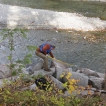
Surface Water Collection
One of the components of the First Nation Food Nutrition and Environment Study (FNFNES) will be to address the presence of pharmaceuticals in surface water on First Nations reserves. The objectives of the pharmaceuticals component of the FNFNES will be:
- To establish a baseline of human pharmaceuticals occurrence in surface water on reserves in Canada
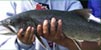
- To determine the exposure of fish and shell fish (staples in First Nations’ diet) to human pharmaceuticals in surface water on reserves in Canada
- To establish a pharmaceutical priority list for future health and environmental effects studies
The criteria used for the selection of pharmaceuticals were:
- levels of detection of the pharmaceuticals in the aquatic environment in previous studies
- frequency of detection of the pharmaceuticals in the environment in previous studies
- evidence of usage of the pharmaceuticals in First Nations communities.
HOUSEHOLD interviews
Traditional Food Frequency Questionnaire
This questionnaire has 2 parts. The first part asks about the traditional foods eaten in the past year and how often they were consumed. The second part asks about the sources of water in the home, the average consumption of beverages and soups likely to contain water, and the different sources of water in the home used to make the beverages and soups.
24-Hour Diet Recall
In this section we will record foods consumed in the past 24 hours with as much detail as possible. Questions asked include:
- Portion Size
- Ingredients
- Time food is consumed
SHL Questionnaire
The social/health/lifestyle (SHL) questionnaire incorporates several questions from the Health Canada Canadian Community Health Survey questionnaire and others as appropriate, including:
- General Health
- Height and Weight (verified)
- Vitamin and Dietary Supplement Use
- Physical Activities
- Smoking
- Food security
- Socio-Demographic Characteristics
- Labour Force
Food Security Questionnaire
This last section asks questions about affordability of food within the home. While some of the questions are very personal and are sometimes difficult to answer, this information will help community and health leaders to have a better understanding of problems that may face families in the community and to design better programs to help.
MERCURY in hair
The FNFNES Mercury in Human Hair Component
One of the significant limitations of the current information on methylmercury exposures among First Nations peoples is that they are based on volunteer sampling and cannot be extrapolated to represent populations, even at a regional level. Furthermore, no systematic sampling across the country has been done since the end of Methylmercury in Canada Program in 1998/1999. There is a need to undertake bio-monitoring initiative for methylmercury in order to examine the current trend in relation to the previously collected information.
Specifically in regard to this study, the collection of bio-monitoring information allows to validate the outcomes of dietary questionnaires and, therefore, better deal with identification of outliers in the population.
Therefore, the FNFNES includes a non-invasive bio-monitoring component, relying on sampling of human hair for analysis for mercury in order to use this information for additional validation of dietary assessments and to develop a new estimate of First Nations populations’ exposure to methylmercury across Canada.
Overview of Sampling Procedure
The hair will be collected according to the established procedure of the First Nations and Inuit Health Branch (FNIHB) Laboratory, formerly known as the Laboratory Services of the Medical Service Branch. In essence, a 5 mm bundle of hair will be isolated and cut from the occipital region, ensuring a minimal, and most often unnoticeable, effect on participants’ aesthetics. The hair bundle (full length, as cut from the scalp) will be placed in a polyethylene bag and fastened to the bag with three-to four staples near the scalp end of the hair bundle. The hair sample accompanied by a duly filled Chain of Custody form will be sent to the FNIHB Laboratory.
Total and inorganic Hg in the hair, will be analyzed by the FNIHB Laboratory in Ottawa, Canada. Each hair bundle will be cut into 1 cm segments, starting from the scalp end, an analysed to provide the levels of mercury in participant’s hair for approximately the last three months.
Segmented hair samples will be digested to release ionic mercury species. The ionic mercury species will selectively be reduced to elemental mercury. The elemental mercury will be measured by Cold Vapor Atomic Fluorescence Spectrophotometry (CVAFS). Selective reduction of the ionic mercury species allows for the measurement of Total or Inorganic mercury in hair. The limit of detection is 0.02 ppm for total or inorganic mercury in hair.
Any unused hair left from the original bundle will be reattached to the polyethylene bag, and the unused segments will be kept in small envelopes in the polyethylene bag. Those will be stored in the FNIHB Laboratory for the duration of the study, to ensure that should there be requests for re-analysis from participants, they could be addressed. At the end of the study the remaining samples will be returned to participants or destroyed in accordance with First Nations spiritual practices. In order to determine which specific course of action to take, a question will be posed at the community meetings for results reporting to First Nations communities.
TRADITIONAL Food
Traditional Food Sampling for a total diet study (TDS) suite of contaminants
Traditional food composites will be collected on the basis of dietary questionnaires, so that collected foods represent at least 80% of the traditional foods consumed that season/year in each of the communities. The list of traditional food composites will be developed for each region and may be updated to take into consideration changing geography (dietary areas/ecozones) of the survey and latest intake information.
A tentative food-sampling strategy is as follows:
- Up to 30 food samples will be collected from each participating community.
- The community will identify the most commonly consumed food, the foods that are of the most concern and foods that are known to accumulate higher concentrations of contaminants.
- Each of the food samples will be a composite of tissues from 5 different animals or plants.
The traditional food samples collected will be analyzed for the following categories of toxic chemicals, based on the general structure of the Canadian Total Diet Study 1992-1999. pesticide residues polychlorinated biphenyls (PCBs) polychlorinated dibenzo-p-dioxins and polychlorinated dobenzofurans Trace metals Polycyclic Aromatic Hydrocarbons (PAHs) Polybrominated fire retardants (PBDEs) Perflourinated Compounds (PFOS/PFOA) Pharmaceuticals and Personal Care Products (PPCPs)
In addition, traditional food composites will be analyzed for essential nutrients and vitamins.
DRINKING water
Drinking Water Collection
Drinking water coming from the distribution system is regularly tested for trace metals. Nevertheless, trace metal contamination can also come from the household plumbing system and tap water could therefore contribute to total metal intake. There is a need to expand the current knowledge about the trace metal content of tap water in First Nations communities.
The Drinking Water Component of the First Nation Food Nutrition and Environment Study (FNFNES) will determine the levels of trace metals in tap water on First Nations reserves. The objectives are:
- To determine levels of trace metals in drinking water in First Nation households on-reserve
- To estimate intake of trace metals from drinking water
- To estimate relative contribution of water to total trace metal intake.